I'm Rachel Williams, a Luxury Real Estate Advisor in Delray Beach and Palm Beach County with The Premier Group at Compass, the #1 real estate team in Delray Beach, Florida by sales volume. In 2025, our team closed more than 550 transactions and over $475 million in sales. Delray Beach is one of the most-searched addresses in Palm Beach County, and the first question I get from every out-of-state buyer is "where in Delray should I live?"
Here's the honest reframe: it's not what areas are the best. It's what areas are the most valuable, and why. Delray Beach is small on a map, but it breaks cleanly into three different product markets with three different cost-of-living profiles, three different lifestyles, and three different buyer profiles. The right one for you depends on what you value, not on which one is subjectively the best.
The Three Areas Of Delray Beach
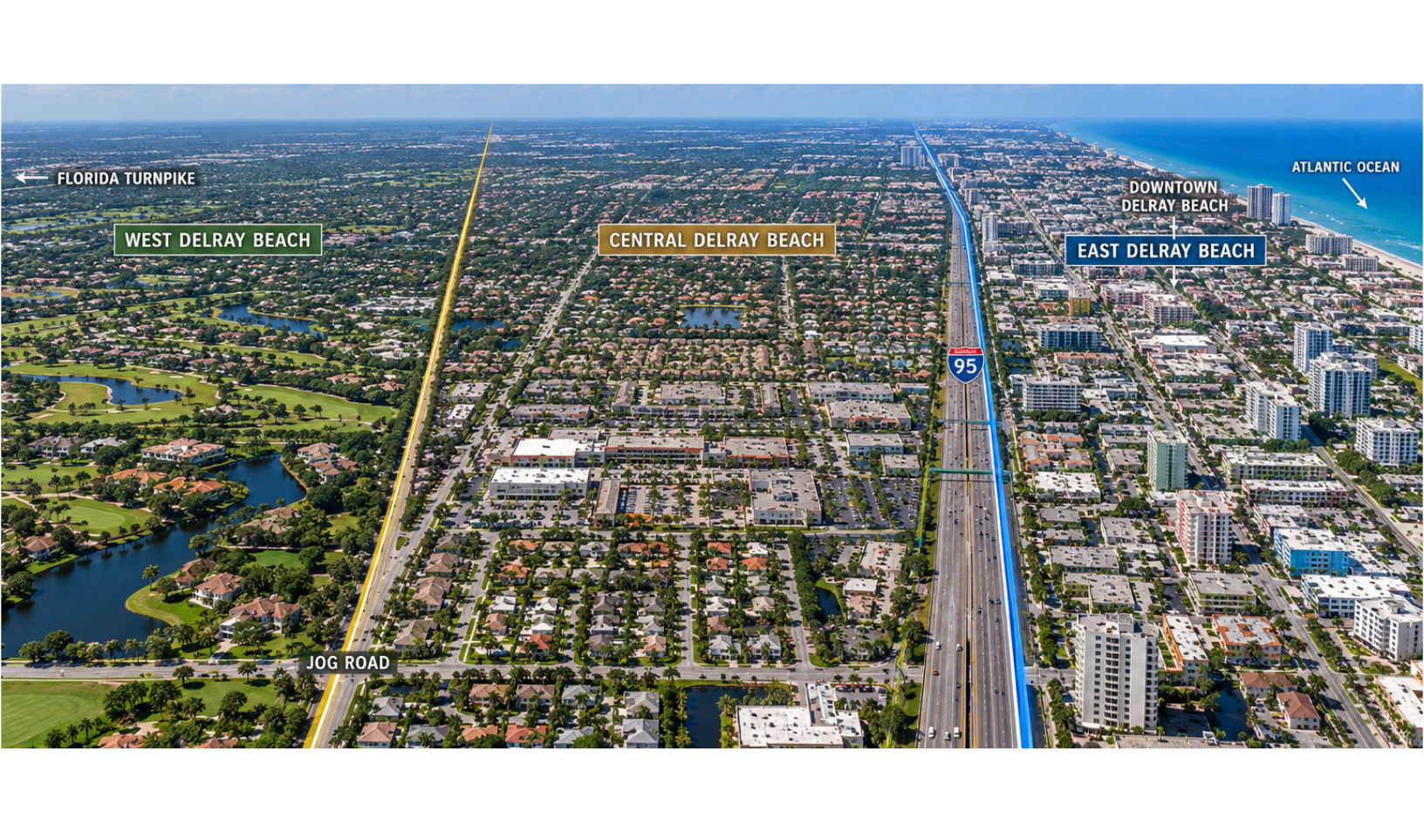
East Delray Beach – everything east of I-95
Walkable, oceanfront-adjacent, mix of historic districts, downtown core, condo and apartment corridors along Linton Boulevard, and non-HOA single-family. Higher insurance exposure due to proximity to the coast. More walkable than the rest of Delray. Fewer gated communities overall; most single-family east of I-95 is non-HOA unless it's a condo or townhome product.
Central Delray Beach – west of I-95, between Congress Avenue and Jog Road
Suburbia-style living. Heavier concentration of HOA single-family, townhome communities, and some condo product. Multiple shopping centers close by, Publix within 5 minutes, 5 to 15 minutes to downtown Delray depending on specific block. A handful of country clubs in this corridor.
West Delray Beach – west of Jog Road out to the Turnpike and beyond
Planned developments, country clubs, master-planned amenity communities, A-rated school zones, larger homes per dollar, Delray Marketplace, and even equestrian facilities on the far west side. Country-club and amenity lifestyle is the primary draw. Even the furthest west homes in Delray are only 25 to 30 minutes from the beach.
East Delray Beach ( Everything East of I-95)
What Defines It
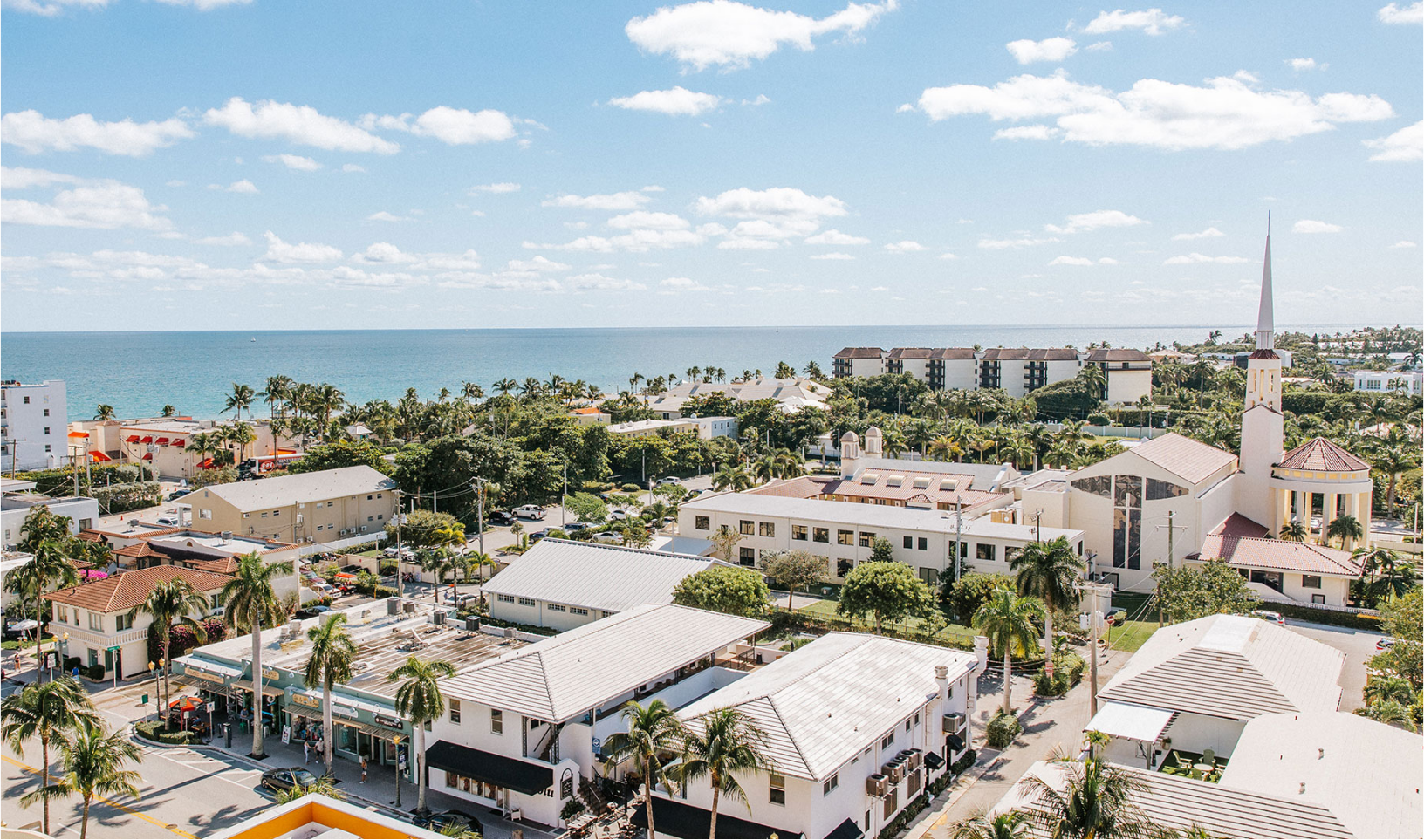
East Delray is the walkable, oceanfront-adjacent core. It covers everything east of I-95, which includes:
The downtown Atlantic Avenue corridor – one of the densest independent restaurant and gallery corridors in South Florida, anchored by Old School Square, the Pineapple Grove Arts District, and the historic districts (Del-Ida Park, Old School Square Historic District, West Settlers).
The Linton Boulevard corridor – shopper-friendly, close to the beach, close to Trader Joe's, and one of the most practical day-to-day neighborhoods in Delray. Plenty of condos and apartments, plus pockets of single-family non-HOA homes. Popular with buyers who want the East Delray convenience without the downtown Atlantic Avenue price tag.
The barrier island and A1A corridor – Seagate, Beach-side Estates, oceanfront single-family and oceanfront condos. The top of the East Delray price band.
Canal communities and Intracoastal single-family – Tropic Isle (600+ homes on 100-foot canal lots, no HOA, direct Intracoastal access), Tropic Palms, Seagate waterfront. The only Delray addresses with private dockage.
Walkable East Delray neighborhoods between the two – Osceola Park, Lake Ida, Southridge, parts of Pineapple Grove and Del-Ida Park.
The Value Proposition
East Delray is for buyers who value:
Convenience and walkability. Walking distance to Atlantic Avenue dining, Old School Square cultural events, boutique retail, and (depending on specific neighborhood) the beach itself.
Proximity to the ocean. Everything east of I-95 is within 10 minutes of the beach. East of Federal Highway is often within walking or biking distance.
Historic district architecture. Delray's five historic districts are concentrated east of Swinton Avenue. Protected architectural character ranging from 1902 to 1945.
The Trade-Offs
Insurance costs can run higher due to proximity to the coast. Verify current homeowners insurance quotes before committing to a specific address.
Most single-family homes east of I-95 are non-HOA, which means no manned gates on most streets. The exceptions are condo and townhome communities, which do carry association structures.
Walkability is a feature of some East Delray neighborhoods and not others. Osceola Park walks to Atlantic Avenue. Southridge is about a mile away. Seagate walks to both the beach and Atlantic Avenue. Lake Ida is bikeable but not fully walkable.
Price Band
$400K condos to $30M+ oceanfront estates.
Central Delray Beach
West of I-95, between Congress Avenue and Jog Road
What Defines It
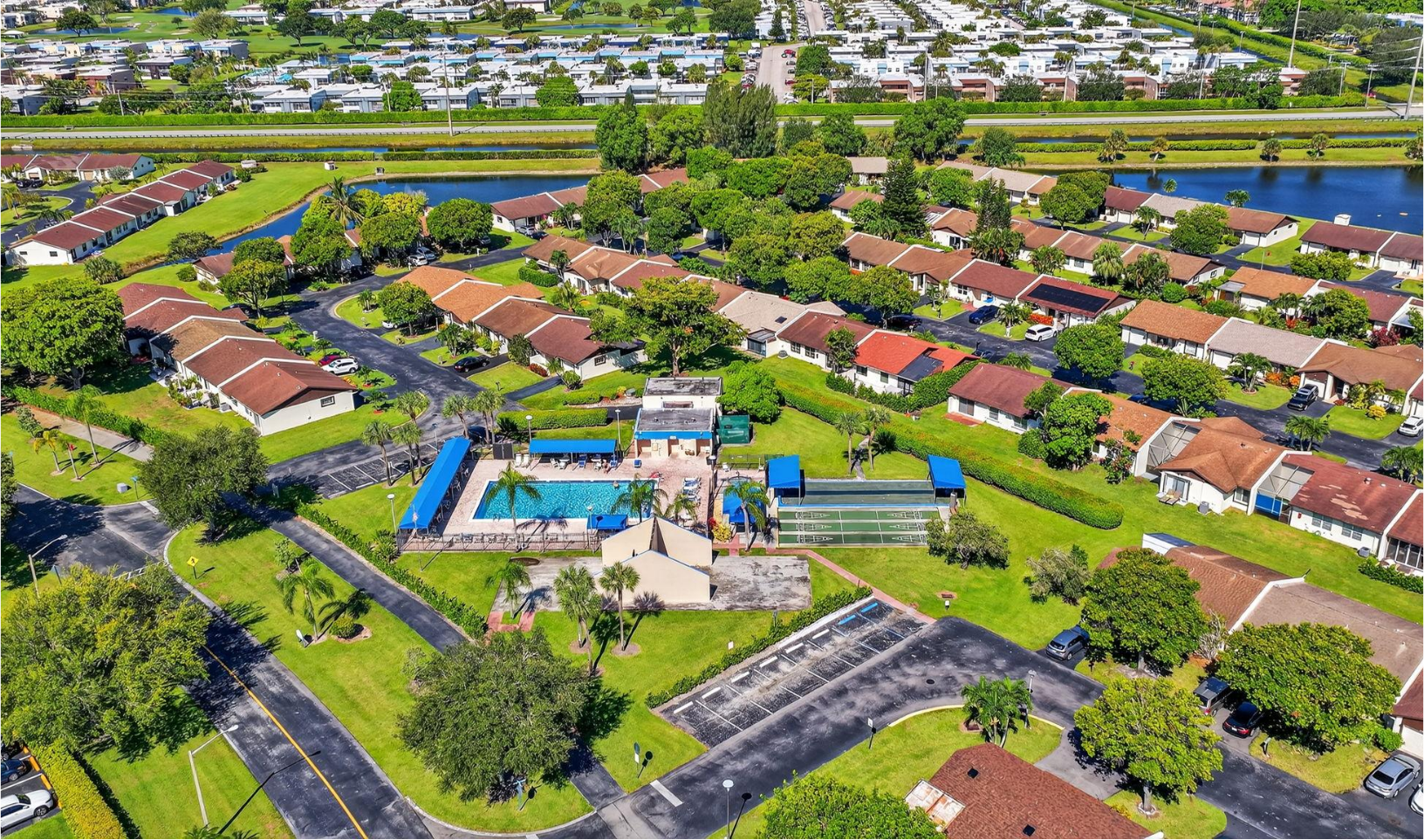
Central Delray is the suburbia corridor. It runs the full north-south span of Delray Beach (from the city's northernmost street to the southernmost) in the band between Congress Avenue and Jog Road. This is where you find the heaviest concentration of HOA single-family communities, townhome product, some condo inventory, and a handful of country clubs.
This is my personal favorite area of Delray, and here is why: it reads suburban without feeling isolated. You're 5 minutes from Publix with multiple shopping centers nearby. You're 5 to 15 minutes from downtown Atlantic Avenue depending on exactly where in Central Delray you are. You get a lot more house per dollar than East Delray. And unlike West Delray, you're not committing to a country club lifestyle or a 25-minute drive to the beach.
Think of Central Delray as the "I want a yard, I want a Publix close by, I want to be able to drive to Atlantic Avenue for dinner without planning a whole evening around it" area.
The Value Proposition
Central Delray is for buyers who value:
Suburbia-style single-family. Heavy concentration of HOA single-family communities with yards, driveways, and the standard suburban residential pattern.
A short drive to downtown. 5 to 15 minutes to Atlantic Avenue depending on specific block.
Day-to-day convenience. Multiple grocery stores, shopping centers, big-box retail, and services within 5 minutes.
Price per square foot. More home per dollar than East Delray at comparable product quality.
A mix of HOA options. From gated master-planned to townhome communities to a handful of mid-size country clubs. The HOA structure means amenities and manned gates where you want them.
Price Band
$400K to $5M+ depending on specific community and product type.
West Delray Beach
West of Jog Road out to the Turnpike and beyond
What Defines It
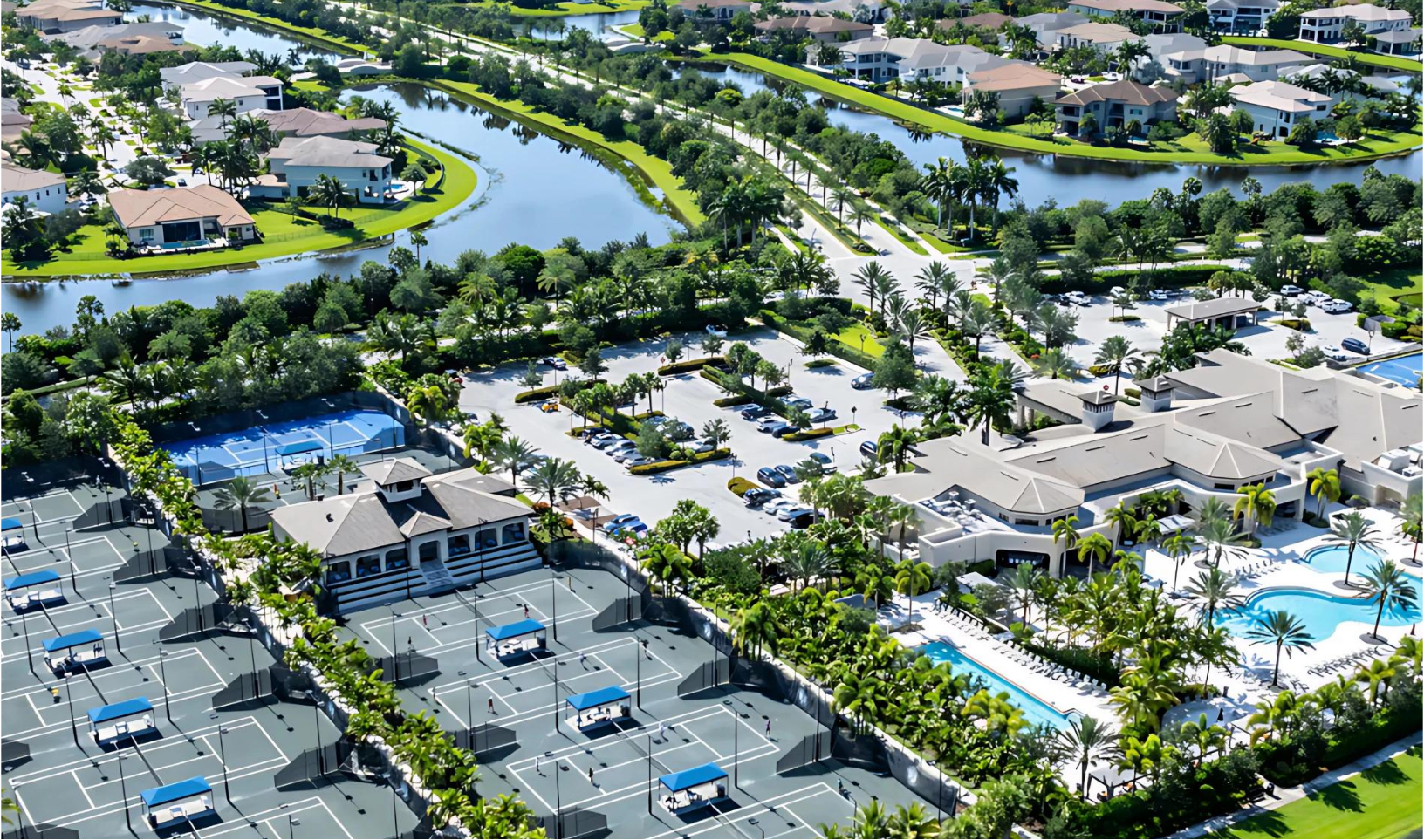
West Delray is country-club, planned-development, and amenity-community territory. The further west you go, the larger the home per dollar, the more master-planned the community, and the more amenity-driven the lifestyle. This is where:
A-rated public school zones – multiple consistently A-rated schools in the Palm Beach County School District serve the West Delray corridor as well as parts of Central.
Country clubs – Addison Reserve, Mizner Country Club, Delaire Country Club, Gleneagles Country Club. Equity-mandatory and non-mandatory club product.
Master-planned amenity communities – Seven Bridges by GL Homes (700 luxury single-family homes with resort amenities included in HOA, no country club dues), plus Vizcaya and Villa Borghese.
GL Homes Valencia 55+ product – Valencia Palms, Valencia Falls.
Large 55+ condo communities – Kings Point (7,200 units), Huntington Pointe (1,096 units), Huntington Lakes (842 units across 5 sections), Palm Greens (1,401 units), High Point of Delray (~700 villa units across 7 sections).
Equestrian facilities – the far west side of Delray Beach includes equestrian zoning and horse facilities. Rare for a coastal South Florida city.
Delray Marketplace – the lifestyle shopping/dining anchor for West Delray. A draw point for buyers who want suburbia with their own retail and dining ecosystem out west.
The Value Proposition
West Delray is for buyers who value:
Country-club or amenity lifestyle. Resort-style pools, tennis, pickleball, clubhouses, event programming, dining, and golf. Either through a country club membership structure or through amenities included in HOA.
A-rated public schools. Multiple A-rated Palm Beach County School District schools serve West Delray.
Larger homes and larger lots per dollar. More square footage, more land, more amenities per dollar than East or Central Delray.
Planned community character. Gated entries, consistent architecture, manicured streetscapes, HOA-governed exterior standards.
Space to spread out. Multi-car garages, home offices, formal living areas, outdoor loggias, pool decks. All at a lower per-foot cost than East.
The Trade- Offs
Even the furthest-west home in Delray is 25 to 30 minutes from the beach at most. For most West Delray addresses the beach is 15 to 25 minutes depending on traffic.
Day-to-day life is more car-dependent than East or Central. Delray Marketplace helps, but walkable urban character is not what West Delray is selling.
Country club and amenity carrying costs. HOA fees, club dues, and (in some cases) mandatory equity contributions can add meaningful annual carrying costs on top of the mortgage. See my separate Delray Country Clubs guide for the specifics.
Price Band
$150K 55+ condos to $20M+ country club estates.
It Is Not Which Area Is Best
It Is Area Is Most Valuable For How You Want To Live
If your priority is walking to Atlantic Avenue, having the beach as part of daily life, and historic district character – East Delray is most valuable to you.
If your priority is a yard, suburbia-style single-family, a Publix 5 minutes away, and a 10-minute drive to Atlantic Avenue dinner – Central Delray is most valuable to you.
If your priority is A-rated schools, country-club or amenity-community living, bigger homes per dollar, planned development, and (optionally) equestrian facilities – West Delray is most valuable to you.
None of these is objectively better than the others. Each is optimized for a different lifestyle, and the correct answer depends on what you actually want your day-to-day to look like.
Quick Decision Framework
Four questions I ask every Delray buyer:
1. How often do you want to be at the beach or on Atlantic Avenue?
Daily/weekly: East Delray.
Weekends only: Central or West.
A few times a month: West is fine.
2. Do you want a yard with HOA single-family, or walkable condo/townhome?
Yard + HOA single-family: Central.
Walkable condo or townhome: East.
Country club or master-planned amenity: West.
3. Are you school zone-driven?
A-rated public schools concentrated in West Delray.
4. What's your tolerance for insurance costs?
Highest exposure: East Delray coastal.
Moderate: East Delray west of A1A, Central Delray.
Lowest: West Delray interior.
Delray Beach is three different markets under one city name. East of I-95 is walkable, oceanfront-adjacent, historic-district-rich, and comes with higher insurance exposure and fewer gated communities. Central Delray (between Congress and Jog) is suburbia-style with heavy HOA single-family, 5 minutes to Publix, 5-15 minutes to downtown, and more house per dollar than East. West of Jog Road is where country clubs, master-planned amenity communities, A-rated school zones, Delray Marketplace, and equestrian facilities live.
The question isn't which area is best. The question is which area is most valuable for how you want to live.
If you want help turning that into a shortlist of 3-5 specific homes to tour, reach out.
Rachel Williams | Real Estate Advisor and REALTOR
The Premier Group at Compass
Serving Delray Beach • Boca Raton • Palm Beach County
561-900-5477
403 N Swinton Ave Delray Beach, FL 3344
