I am Rachel Williams, a Real Estate Advisor with The Premier Group at Compass, the #1 real estate team in Delray Beach, Florida by sales volume. My practice covers the full Palm Beach County corridor: Delray Beach, Boca Raton, Boynton Beach, West Palm Beach, and Wellington. But my Wellington practice is personal. I am a competitive dressage rider and lifelong equestrian, so when I walk a Wellington farm with a client, I am reading it the way you would: stall configuration, footing, wash rack layout, hack access, trailer turnaround, arena drainage, staff housing setup, and the daily-life details that determine whether a property actually works for the horses. That combination of Compass reach and Premier Group volume plus in-the-tack knowledge of what a working Wellington farm needs is what I bring to every Wellington buyer and seller.
Wellington, Florida is the winter capital of the equestrian world. From late December through the end of March, more than 31,000 competitors from 50+ countries and all 50 states come through the village for the 13-week Winter Equestrian Festival at Wellington International, a season that will offer a record $16.55 million in prize money in 2026, including the $1 million Rolex U.S. Equestrian Open Grand Prix on March 28. The Winter Equestrian Festival generates $536.2 million in annual economic impact in Palm Beach County, outpacing the Miami Grand Prix and MLB Spring Training. Top-level show jumpers on the WEF grounds are commonly valued at $5 million to $15 million or more per horse.
That density of competition, capital, and horse infrastructure is why Wellington has one of the most specialized residential real estate markets in the country. There is no other village in the United States where the majority of the most valuable real estate is designed first for horses and second for humans.
This guide breaks down Wellington's equestrian neighborhoods by the questions a rider actually asks when they call me: How close to the showgrounds? Bridle path access or trailer only? How many stalls does the lot permit? What is the daily routine going to feel like from this address?
Tier 1: Walk - to Showgrounds ( The Highest Tier)
GRAND PRIX VILLAGE: 59 CUSTOM HOMES AND FARMS
Adjacent to Wellington International (WEF showgrounds)
Lot sizes: averaging approximately 4 acres
Developed: beginning in the late 1990s
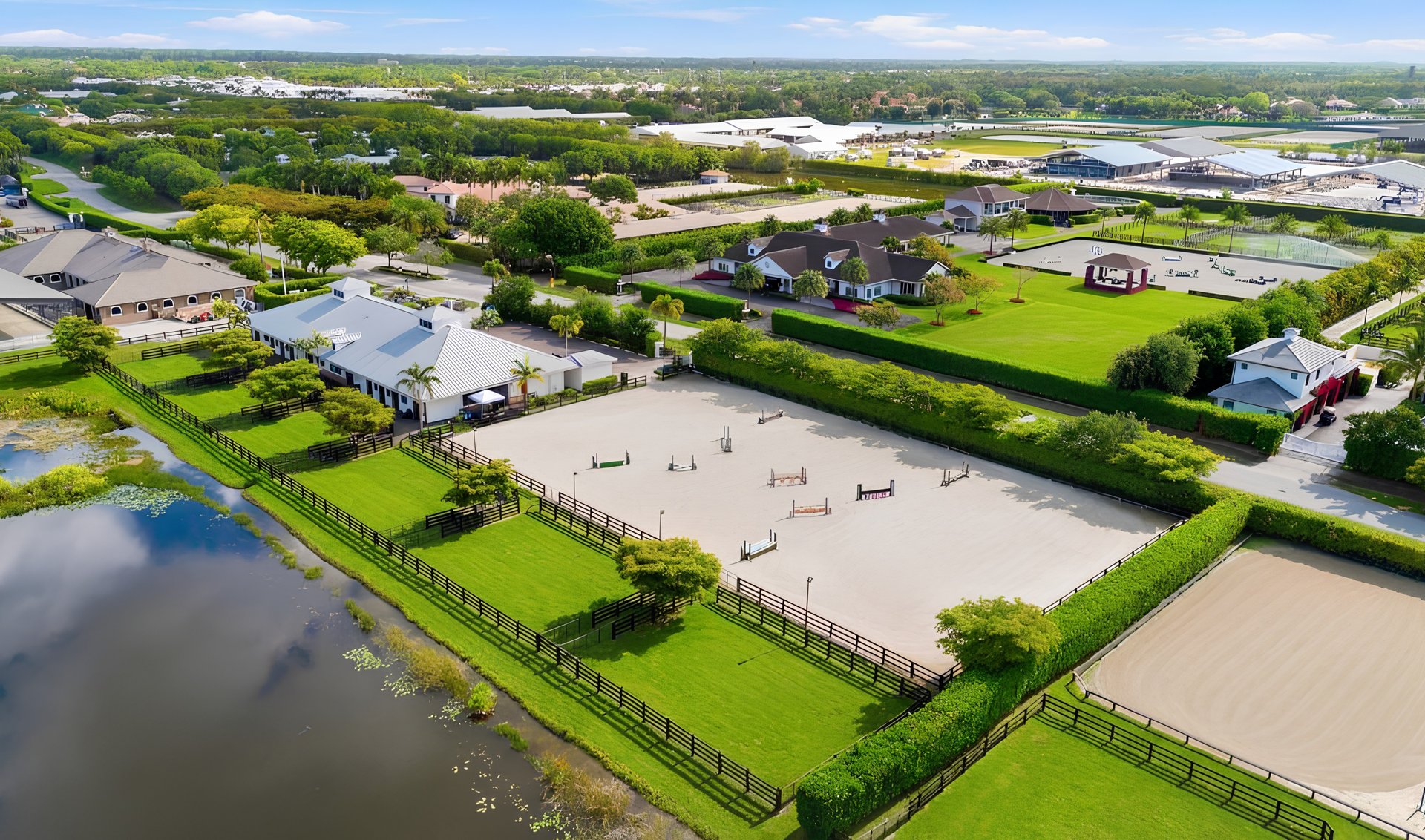
Grand Prix Village is the single most coveted address for serious show-jumping families during WEF. The community sits directly adjacent to Wellington International, and most farms have direct or very short bridle-path access to the show rings. Guard-gated. 59 custom-built homes and farms on multi-acre parcels averaging about 4 acres, each combining a high-end residence with professional barns, arenas, and paddocks, plus staff housing.
Why serious competitors pick it: you can hack your horse to the ring. That eliminates trailer loading twice a day during the 13 weeks of WEF and dramatically reduces stress on the horse. For upper-level competitors running strings of 6 to 12+ horses, that difference alone can justify the premium.
Rider note: Grand Prix Village addresses trade at the highest per-acre pricing in Wellington precisely because the walk-to-WEF factor cannot be replicated. Inventory is thin (59 total farms) and off-market transactions are common.
Tier 2: Less Than a Mile or Short Hack
PALM BEACH POINT: 800+ ACRES, 5-ACRE MINIMUM LOTS
Location: western side of Wellington, surrounded by waterways on all four sides
Lot sizes: minimum 5 acres; some 10-acre parcels available
Distance to Wellington International: less than a mile
Stall permitting: 12 stalls permitted on a 5-acre estate
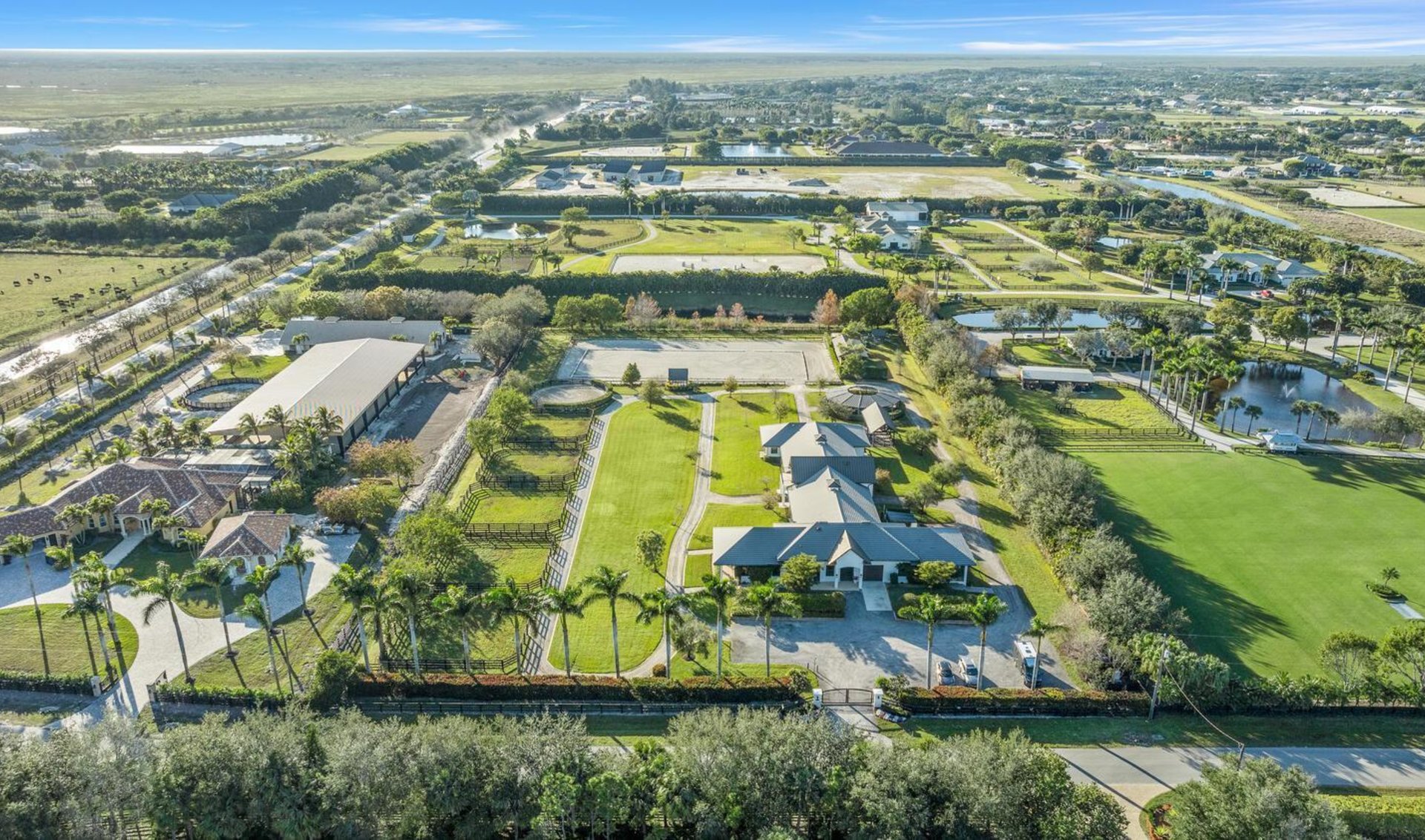
Palm Beach Point is the primary destination for competitive riders who want serious acreage, privacy, and short-hack access to WEF without paying Grand Prix Village pricing. Gated. Cobblestone entrance. Oak-lined streets. Access to Wellington's trail system with easy trail riding to the showgrounds.
Palm Beach Point appeals to competitive riders, owners with multiple horses, and seasonal or international buyers who want acreage and privacy. It is my most common recommendation for a buyer running 4 to 12 horses who wants a genuine working farm rather than a smaller in-town setup.
Rider note: the 5-acre minimum and 12-stall allowance is what makes Palm Beach Point work for full-time training operations. Palm Beach Point East is a related but separate section: verify which specific section you are looking at because the rules and product mix differ.
Tier 3: Wellington's Original Equestrian Grid
SADDLE TRAIL PARK: 500 HOMES, BRIDLE-PATH ACCESS
Location: north and south of Greenbriar Boulevard, inside Wellington's Equestrian Preserve
Lot sizes: typically 1.5 to 4.5+ acres
Build era: early 1980s through the 2000s
HOA: none (non-HOA community)
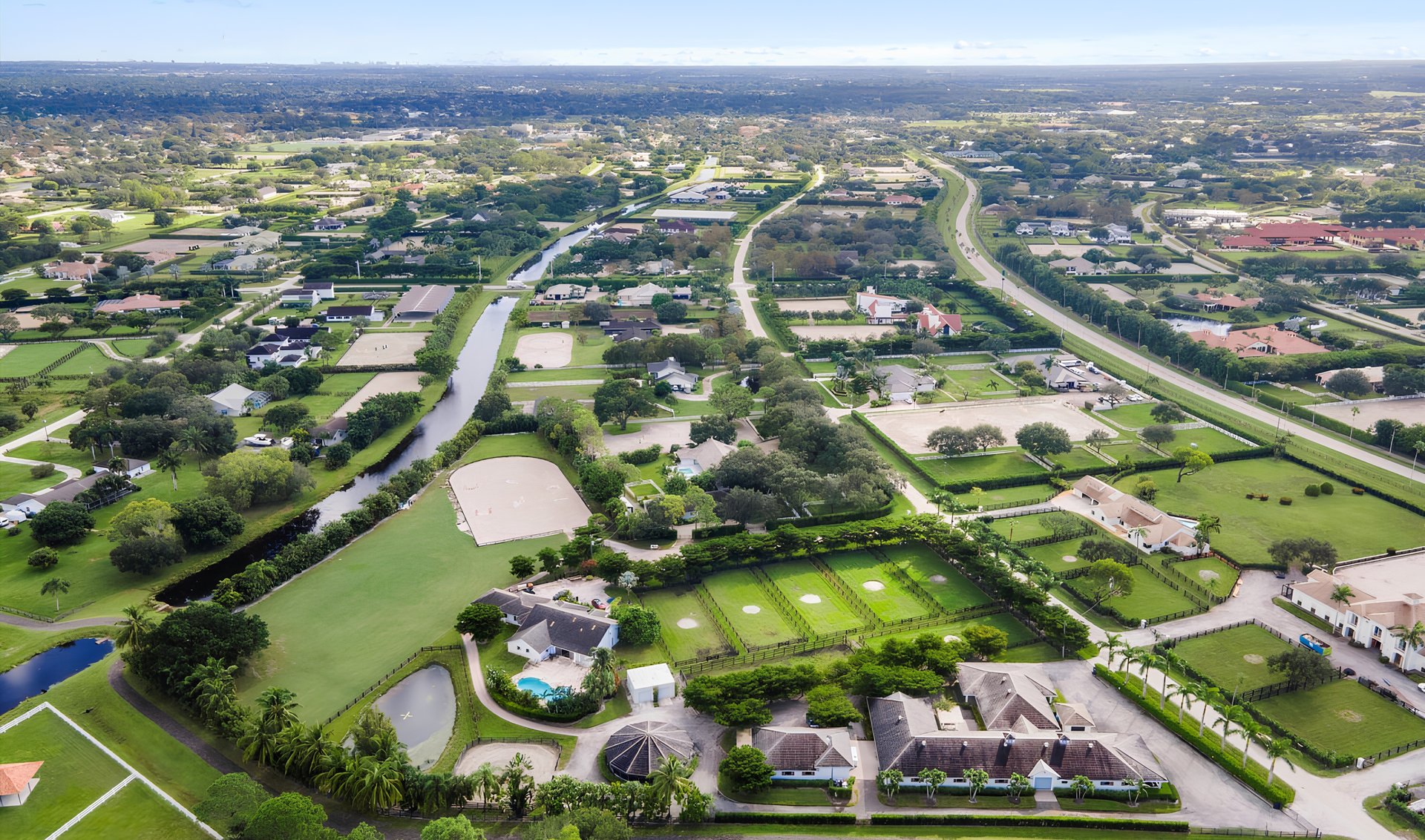
Saddle Trail Park is one of Wellington's original equestrian neighborhoods and, for many riders, the best combination of price, hack access, and traditional Wellington character. 500 custom single-family homes and equestrian estates on lots typically ranging from 1 acre to over 4 acres. Barns range from modest 6- to 12-stall setups to larger multi-barn operations with irrigated arenas.
The differentiator is bridle-path access. Miles of mapped bridle paths wind through Saddle Trail Park with direct connectivity to Wellington International. For a rider who wants a traditional hacking neighborhood where daily horse movement stays simple and trailer trips are limited, Saddle Trail Park is often the answer.
Rider note: no HOA is a genuine feature here. Grand Prix Village and Palm Beach Point have HOA and gate structures; Saddle Trail Park does not. That means faster closings, fewer architectural review issues on barn modifications, and more flexibility for riders who want to renovate a barn or arena without committee approval.
Tier 4: Country Club Equestrian
PALM BEACH POLO AND COUNTRY CLUB: 2,200 ACRES, ~1,250 RESIDENCES
Location: 11199 Polo Club Road, Wellington
Community structure: 45 Mediterranean-inspired villages
Home sizes: 3,000 to over 10,000 square feet, 4 to 12 bedrooms
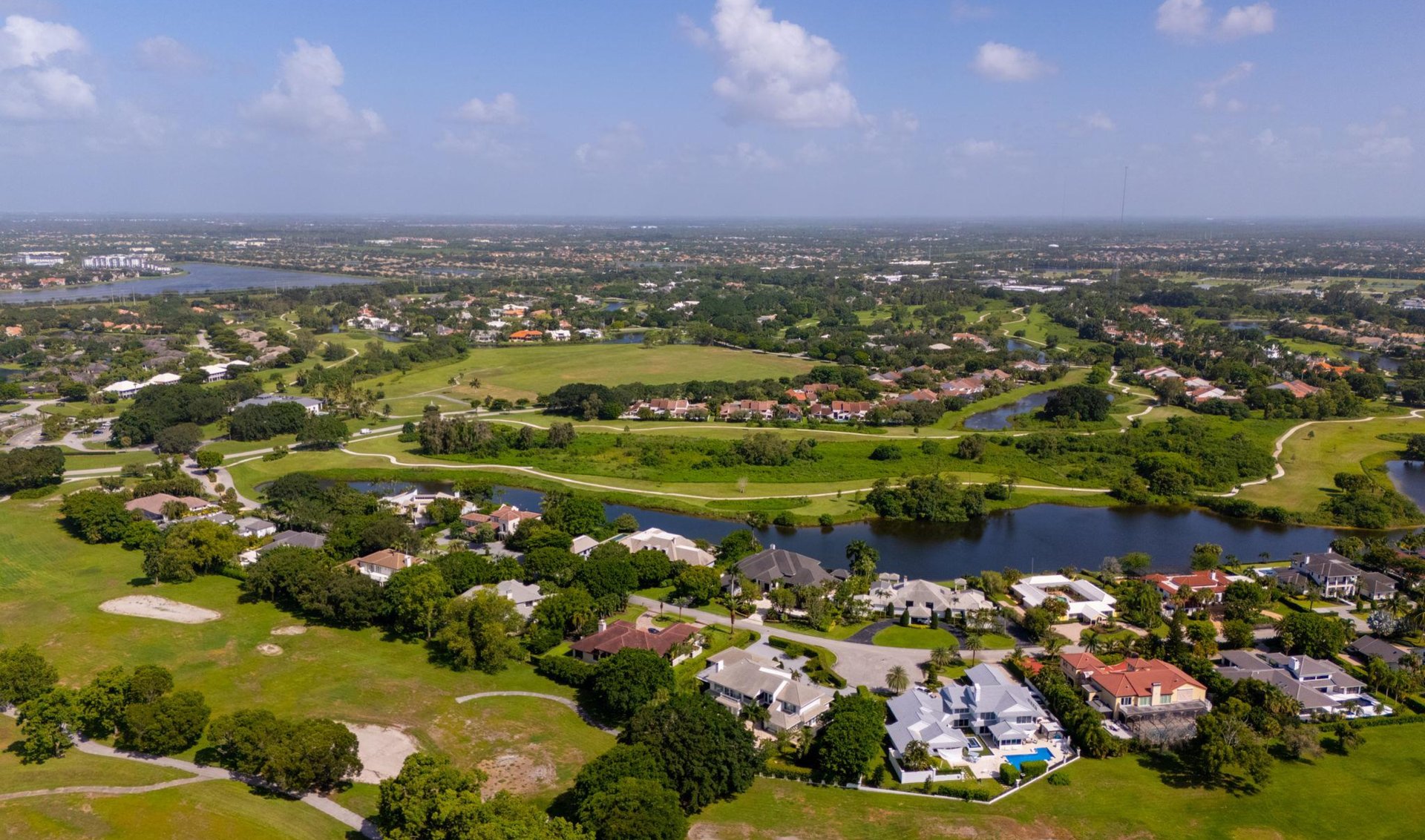
Palm Beach Polo and Country Club is the flagship country club community in Wellington. 2,200 acres. Approximately 1,250 residences across 45 villages, ranging from villa product up through 10,000+ square foot custom estates. Some residences include paddocks, private barns, and equestrian access: this is where the "country club plus horses" buyer profile lands.
Amenities: 18-hole championship golf course, 8 polo fields, 100-stall barn, show jumping and dressage facilities, tennis, croquet, stately clubhouse, resort-style pool, and fine and casual dining. Reciprocity arrangements with other Wellington equestrian venues.
Best fit for: buyers who want the equestrian address without personally running a full-time working farm. The country club membership handles most of the horse infrastructure, and the residential product ranges from lock-and-leave villas to estate acreage.
Rider note: Palm Beach Polo is a full lifestyle destination, not primarily a training address. Serious competitors typically own the horse operation somewhere else in Wellington and use Palm Beach Polo for the residential lifestyle, polo access, and club amenities.
Tier 5: Non- Equestrian But Pilot - Friendly
WELLINGTON AERO CLUB: 254 HOMES ON A LIT PRIVATE RUNWAY
Location: Wellington
Lot sizes: one-acre standard, some oversized
Home sizes: 4,000 to over 10,000 square feet
Community size: ~300 acres
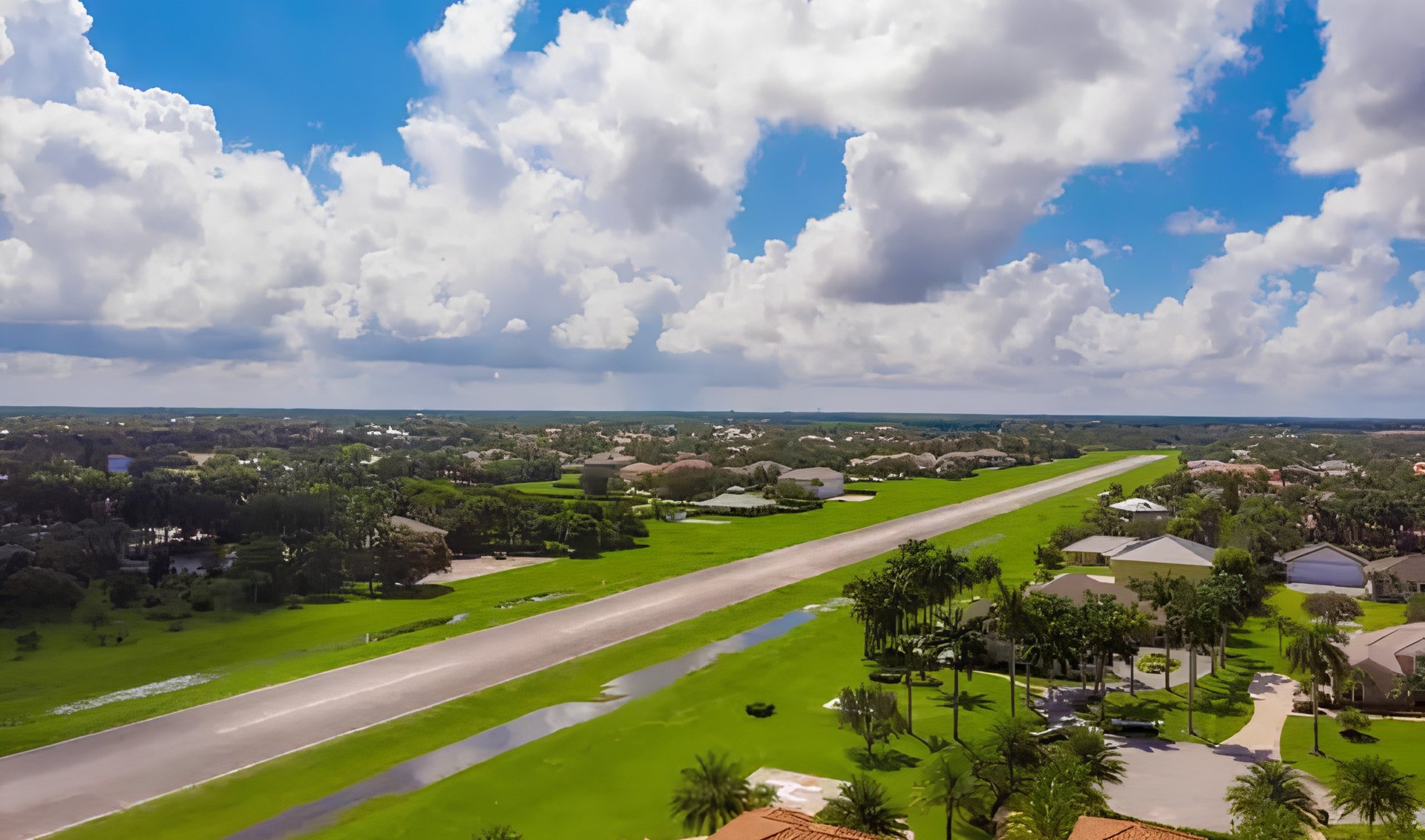
Wellington Aero Club is not an equestrian community; it is an aviation community. But it belongs in a Wellington guide because it is regularly cross-shopped by equestrian buyers who also own aircraft. 254 one-acre homesites built around a private 4,000-foot lighted runway and taxiway system. Custom-built homes with attached aircraft hangars and direct taxiway access.
Best fit for: fly-in equestrians who want to keep the plane at home and the horses within a short drive to WEF or a paddock on a separate property.
How to Match a Wellington Farm to How You Actually Ride
The framework I use with clients, and the one I would use for my own farm, starts with the daily routine, not the address:
1. HOW MANY HORSES?
Fewer than 4 horses: a smaller Saddle Trail Park or in-village address works. Property tax and carrying costs stay manageable.
4 to 8 horses: Palm Beach Point 5-acre or Saddle Trail Park 3-4 acre with a good multi-stall barn.
8 to 12+ horses running a full string during WEF: Grand Prix Village or Palm Beach Point 10-acre. Anything smaller becomes operationally tight during show weeks.
2. HOW ARE YOU MOVING HORSES DURING WEF?
Hacking to the ring: Grand Prix Village is the only true walk-to. Palm Beach Point and Saddle Trail Park are short-hack or trailer.
Trailer twice daily: Saddle Trail Park, Palm Beach Point East, Southfields, Little Ranches all work. Look at trailer turnaround, ingress-egress to Pierson Road or South Shore Boulevard, and travel timing during 7am and 4pm show traffic.
3. WHAT DISCIPLINE?
Show jumping: proximity to Wellington International is the driver. Grand Prix Village first, Palm Beach Point second.
Dressage: proximity to Global Dressage Festival (Adequan Global Dressage Festival grounds) and to Wellington International's dressage facilities. Some Palm Beach Point and Saddle Trail Park addresses work well; some Grand Prix Village farms are optimized more for show jumping than for dressage.
Polo: Palm Beach Polo and Country Club, or a farm with acreage for a private polo field.
4. ARE YOU LIVING HERE OR ONLY SHOWING HERE?
Full-time resident: Wellington's schools, dining, and family infrastructure become factors. Palm Beach Polo, Isles at Wellington, and the family-oriented sections of Wellington matter alongside the equestrian address.
Winter-only WEF seasonal: the residence can be simpler; the farm and horse infrastructure carry the weight. Many of my seasonal clients rent for one to three seasons in a Wellington farm before buying.
5. WHAT ARE THE BARN AND FOOTING SPECS?
This is where my rider background matters most. When I walk a farm, I look at: stall size and layout (12x12 minimum, ideally 14x14 for warmbloods), wash rack drainage, tack room configuration, hay storage and loft, arena footing composition and drainage, ring dimensions (200x100 minimum for jumper work, longer for dressage), lunging area, turnout paddock size and fencing, and staff housing separation from the main residence. These details determine whether the farm will hold up to a 13-week WEF season or fail on the first hard rain.
Wellington Equestrian Market Notes : 2026
WEF 2026 SEASON: December 31, 2025 through March 29, 2026. 13 weeks. $16.55 million in prize money (record). 31,000+ competitors from 50+ countries. The 2026 season introduces transformative facility upgrades at Wellington International.
ECONOMIC WEIGHT: $536.2 million annual economic impact in Palm Beach County. Supports 4,000+ jobs. Larger economic footprint than the Miami Grand Prix and MLB Spring Training.
INVENTORY BEHAVIOR: The most sought-after equestrian addresses in Wellington (Grand Prix Village, Palm Beach Point, and beach-adjacent Saddle Trail Park lots) often trade off-market. If you are searching a public MLS only, you are seeing a fraction of the true available inventory. This is the single most important reason to work with a Wellington-focused agent rather than a generalist.
Wellington offers a genuinely stratified equestrian real estate market:
1. GRAND PRIX VILLAGE: 59 farms, ~4-acre parcels, walk-to-WEF, top of the market
2. PALM BEACH POINT: 800+ acres, 5-acre minimum, less than a mile from WEF, 12-stall allowance on 5 acres
3. SADDLE TRAIL PARK: 500 homes, 1.5-4.5+ acres, direct bridle-path access, non-HOA
4. PALM BEACH POLO AND COUNTRY CLUB: 1,250 residences, 2,200 acres, country club plus horses
5. WELLINGTON AERO CLUB: 254 homes, one-acre standard, private runway, aviation cross-shop
6. Additional communities worth touring depending on budget and use case: Southfields, Little Ranches, Paddock Park, Meadowlark, and the Equestrian Club
The right Wellington farm is almost never the first one a buyer thinks they want. Match the property to how you actually ride: number of horses, discipline, how you plan to move them during WEF, and whether this is a residence or a working operation.
Frequently Asked Questions
Q1: What are the best equestrian communities in Wellington, Florida?
A: Wellington, Florida's equestrian communities are stratified by proximity to the Winter Equestrian Festival showgrounds at Wellington International. Grand Prix Village (59 farms on ~4-acre parcels) is walk-to, directly adjacent to WEF. Palm Beach Point (800+ acres, 5-acre minimum lots) is less than a mile from the showgrounds. Saddle Trail Park (500 homes on 1.5-4.5+ acre lots, non-HOA) offers direct bridle-path access. Palm Beach Polo and Country Club (1,250 residences on 2,200 acres) combines equestrian access with a full country club. Additional communities include Southfields, Little Ranches, Paddock Park, Meadowlark, and the Equestrian Club at Wellington.
Q2: What is Grand Prix Village in Wellington?
A: Grand Prix Village is a guard-gated equestrian farm community in Wellington, Florida located directly adjacent to Wellington International (the WEF showgrounds). Developed beginning in the late 1990s, the community includes 59 custom-built homes and farms on multi-acre parcels averaging about 4 acres. Properties are designed for equestrian use with barns, arenas, paddocks, and staff housing. Many farms offer direct or very short bridle-path access to the show rings, meaning riders can hack directly from home to the WEF grounds during the 13-week Winter Equestrian Festival season.
Q3: How close is Palm Beach Point to Wellington International?
A: Palm Beach Point is less than a mile from the Wellington International showgrounds. The gated community sits on the western side of Wellington across more than 800 acres. Estates in Palm Beach Point are either 5 acres or 10 acres, with residents permitted 12 stalls on a 5-acre estate. Palm Beach Point offers easy trail riding to the showgrounds via Wellington's trail system and is a primary destination for competitive riders running strings of 4 to 12 horses during WEF.
Q4: Does Saddle Trail Park in Wellington have an HOA?
A: No. Saddle Trail Park is a non-HOA equestrian community in Wellington's Equestrian Preserve. It contains approximately 500 custom single-family homes and equestrian estates on lot sizes typically ranging from 1.5 to 4.5+ acres. Homes were built from the early 1980s through the 2000s. Saddle Trail Park is one of Wellington's original riding neighborhoods and features direct bridle-path access to Wellington International.
Q5: What is Palm Beach Polo and Country Club?
A: Palm Beach Polo and Country Club at 11199 Polo Club Road in Wellington is a 2,200-acre country club community with approximately 1,250 residences across 45 Mediterranean-inspired villages. Home sizes range from 3,000 to over 10,000 square feet with 4 to 12 bedrooms. Amenities include an 18-hole championship golf course, 8 polo fields, a 100-stall barn, show jumping and dressage facilities, tennis, croquet, resort-style pool, and multiple dining venues.
Q6: What is Wellington Aero Club?
A: Wellington Aero Club is a private aviation community in Wellington, Florida with 254 one-acre homesites built around a private 4,000-foot lighted runway and taxiway system across approximately 300 acres. Custom homes range from 4,000 to over 10,000 square feet, and many properties offer attached aircraft hangars and direct taxiway access. Wellington Aero Club is not an equestrian community, but it is regularly cross-shopped by equestrian buyers who also own aircraft.
Q7: When is the Winter Equestrian Festival 2026?
A: The 2026 Winter Equestrian Festival runs from December 31, 2025 through March 29, 2026 at Wellington International in Wellington, Florida. The 13-week circuit brings more than 31,000 competitors from over 50 countries and all 50 states, offers a record $16.55 million in prize money, and features the $1 million Rolex U.S. Equestrian Open Grand Prix on March 28.
Q8: How much economic impact does the Winter Equestrian Festival have?
A: The Winter Equestrian Festival generates $536.2 million in annual economic impact in Palm Beach County and supports more than 4,000 jobs. WEF's economic footprint is larger than the Miami Grand Prix and larger than MLB Spring Training in the region.
Q9: How many stalls can you have on a lot in Wellington?
A: Stall permitting varies by community and lot size. In Palm Beach Point, residents are permitted 12 stalls on a 5-acre estate. Grand Prix Village properties on multi-acre parcels averaging about 4 acres accommodate professional barn setups. Saddle Trail Park barns range from modest 6- to 12-stall setups to larger multi-barn operations. Verify current stall allowances with each community's association and Wellington's Equestrian Preserve zoning at time of purchase.
Q10: What is the difference between Grand Prix Village and Palm Beach Point?
A: Both are gated equestrian communities near Wellington International, but they differ meaningfully. Grand Prix Village is directly adjacent to the WEF showgrounds with walk-to (hack-to) access on ~4-acre parcels and 59 total farms. Palm Beach Point is less than a mile from the showgrounds on 5- to 10-acre parcels with 12 stalls permitted on 5 acres. Grand Prix Village trades at higher per-acre pricing because the walk-to-WEF factor cannot be replicated; Palm Beach Point offers meaningfully more acreage and privacy per dollar.
Q11: Should I buy or rent for WEF season in Wellington?
A: Many seasonal WEF riders rent a farm in Wellington for one to three seasons before buying. Rental gives you time to test the neighborhood, barn footing, hack routes, and daily routine before committing to a purchase. Buying makes sense when you know you will return for multiple seasons, want to build the barn and arena to your exact specifications, and want to capture Wellington's appreciation trajectory as a long-term hold.
Q12: What discipline is Wellington best for: dressage, show jumping, or polo?
A: Wellington accommodates all three at the highest level. Show jumping is the largest program at Wellington International (WEF). Dressage riders compete at the Adequan Global Dressage Festival grounds. Polo is centered at the International Polo Club Palm Beach and at Palm Beach Polo and Country Club. Grand Prix Village and Palm Beach Point are more show-jumping oriented; parts of Saddle Trail Park and Palm Beach Point suit dressage well; polo players cluster around Palm Beach Polo and dedicated polo farms.

Rachel Williams | Real Estate Advisor and REALTOR
The Premier Group at Compass
Serving Delray Beach • Boca Raton • Palm Beach County
561-900-5477
403 N Swinton Ave Delray Beach, FL 33444
